What is LED Display?

What is LED Display?
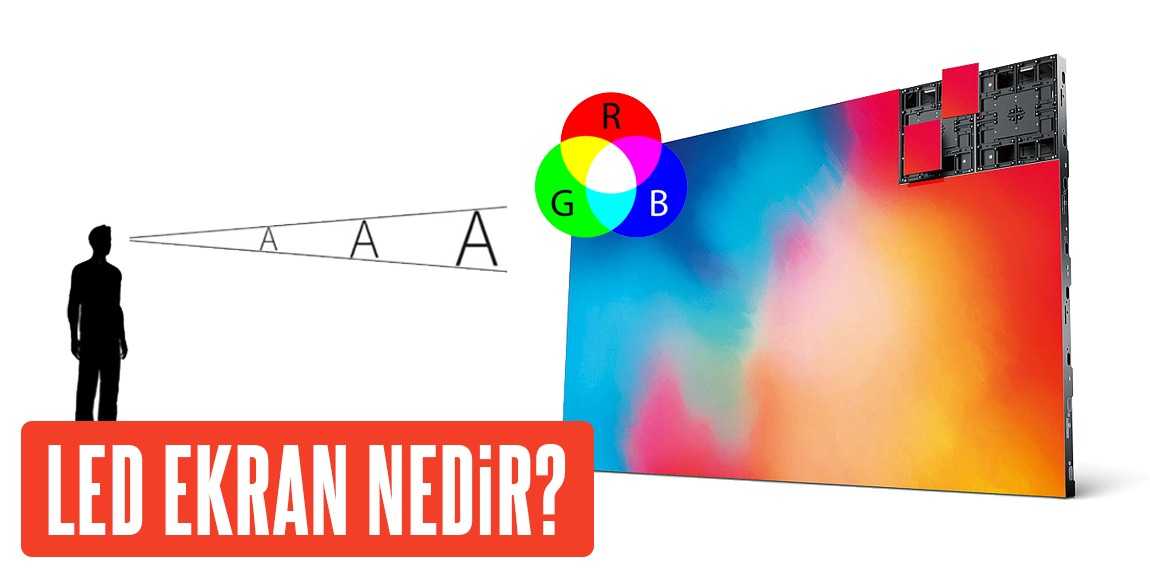
What is LED? LED is the abbreviation of “Light-Emitting Diode”. An LED emits light as a result of electrical luminescence. Unlike old-style bulbs, LED technology is also called cold light because light is not obtained by heating the metal. The diode emits light around itself as it passes through specially produced silicon. This method is more efficient and also more economical. The fact that LEDs are made of solid materials and covered with transparent plastic prevents heating and provides high durability. It also minimizes the cooling problem. How Do LED Panels and LED Screens Work? An LED screen is created by bringing together LED panels of certain sizes. An LED panel consists of many LEDs close to each other. The brightness of each LED changes according to the data from the control card and the diodes create an image on the screen together. New colors are created by mixing different colors of light to create a bright and vivid image. An LED panel consists of red, green and blue LEDs mounted in a standard arrangement. These three colors combine to form a pixel.The light intensity of the diodes can also be adjusted to create billions of colors. When LED screens are viewed from a certain distance, colored pixels are seen as an image. What is RGB? / What is SMD? RGB: is the abbreviation of red, green and blue. All colors seen on LED screens are obtained by mixing these three basic colors. SMD is electronic components that are mounted directly on the printed circuit board, not by soldering metal tips to the circuit board. In LED screen technology, red, green and blue diodes are placed in a small plastic capsule. Since the diodes are placed in capsules in this way with SMD technology, they take up much less space and there can be less space between pixels. And thus, it is possible to produce high-resolution screens. What is LED Screen Power Consumption? LED is a technology with high energy efficiency.The amount of power used by the diodes in an LED screen depends on the size, brightness and usage of the screen. There are many different types of LED screens. For example, the power consumption of an indoor LED screen will be different and less than the power consumption of an outdoor LED screen operating in direct sunlight. The brightness of the LED screens and the colors of the images displayed on the screen are also other factors that affect power consumption. How Long Do LED Screens Last? It is difficult to give a clear lifespan for an LED screen because there are many factors. However, the lifespan of an LED screen that is manufactured to the right quality and has been regularly maintained is more than ten years. As with all electronic products, the lifespan of LED screens varies depending on daily use, maintenance and environmental effects. Using LED screens with light-colored images and high brightness wears out the LED screen more than using low brightness. The lifespan of LED diodes and the light intensity transmitted will also decrease over time depending on the quality and type of diodes.Finally, the humidity and salt content in the air also slightly affect the lifespan of LED screens. What is LED Screen Pixel Pitch and Resolution? The distance between the diodes in an LED screen determines the screen’s resolution. Each diode group reflecting the colors red, green, and blue is called a pixel. The distance between two adjacent LED diodes in millimeters is also known as the pixel pitch. If an LED screen has a pixel pitch of 10 mm, it is called a P10 LED screen. For example, if an LED screen is 96 cm high and 96 cm wide, it has 96×96 pixels: 9216 pixels. In other words, it can be considered a screen with a resolution of 96 x 96 pixels. Outdoor LED screens have wider pixel pitches than indoor LED screens.This is because outdoor LED screens are viewed from a distance, while indoor LED screens are viewed from up close. What Resolution Should I Choose for an LED Screen? The resolution you need for an LED screen depends on the closest viewing distance. While a low-resolution LED screen may appear clear from a distance, it will be difficult to see what’s on the screen up close. Lower resolution screens are preferred for outdoor LED screens installed along main roads or on building facades. This is because the viewing distance is longer, resulting in a clearer image. For indoor LED screens installed inside a store or in a display window, a higher resolution is preferred because the viewer will be viewing from a closer distance, at eye level. Resolution is actually the most important factor in determining LED screen prices. Higher resolution LED screens have more pixels because the distance between the diodes is shorter, resulting in higher square meter prices.